 +33 (0)7 84 05 73 75
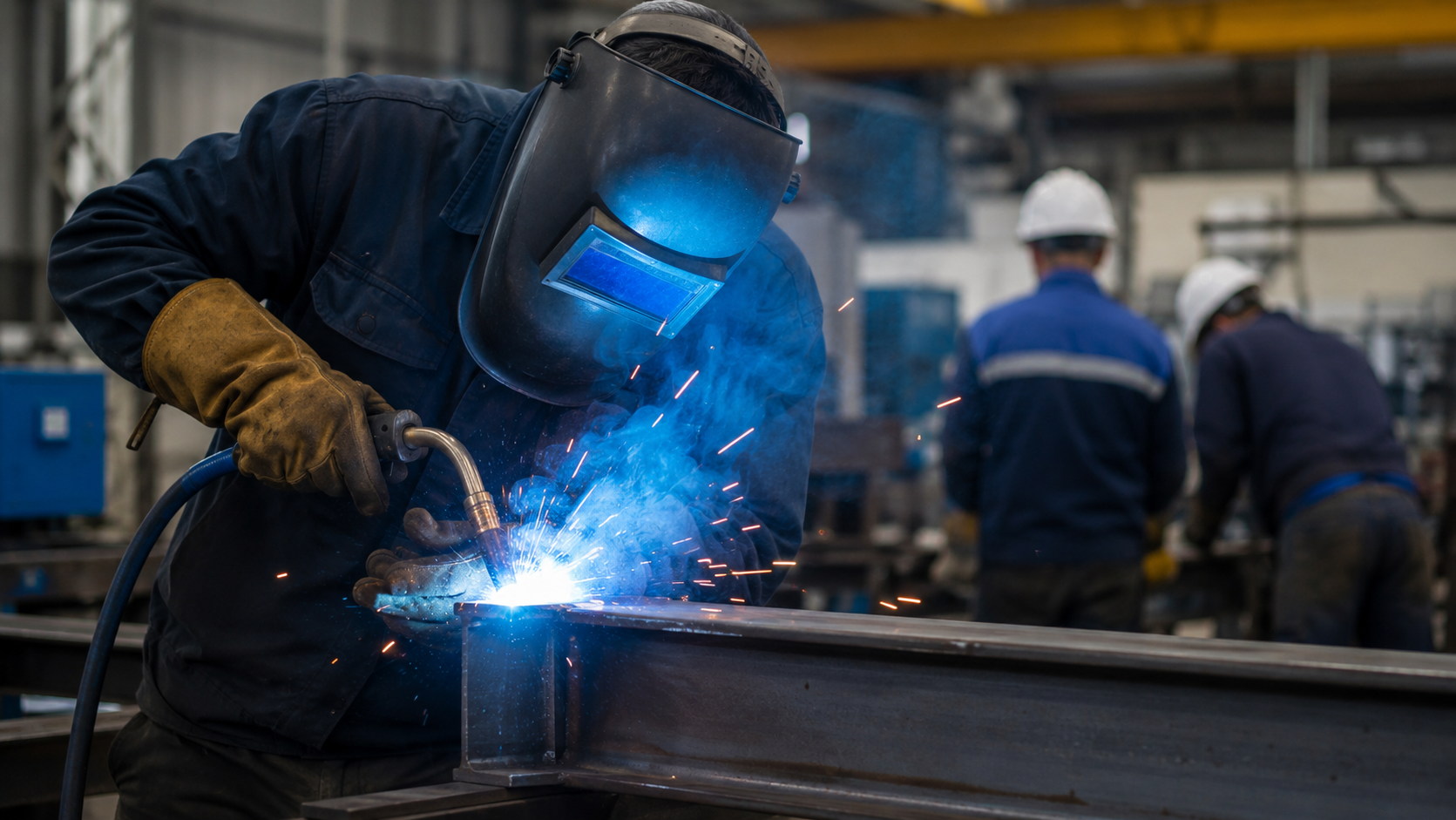
Welders are now among the hardest workers to find in Europe. In France alone, the number of welders has fallen from 40,000 in 2014 to about 28,000 today, according to the French adult vocational training agency Afpa. Meanwhile, the nuclear, shipbuilding and defence industries are hiring heavily. For a metal fabricator or manufacturer making structures, stairs or frames, the question is no longer "how do we recruit?" but "how do we keep producing anyway?".
A shortage that will not resolve itself
The figures point the same way:
- A shrinking pool. In France, around 28,000 welders in work versus 40,000 in 2014, with a loss of about 1,000 welders a year, according to Afpa (source).
- Growing needs. France would need 5,000 to 7,000 additional welders every year (Afpa). The French nuclear sector alone expects to create 15,000 to 20,000 jobs by 2030.
- A European problem. The EU's EURES network lists welders among the occupations with the most severe shortages across the Union (source).
For a metalwork SME, the consequence is direct: large contractors in nuclear and shipbuilding offer wages a 20-person workshop cannot match. Experienced welders leave, and newcomers take years to reach the same level.
What the shortage really costs a workshop
- Orders turned down, or longer lead times that lose the deal.
- Overtime and expensive agency staff, with variable quality.
- Dependence on one or two key people: one sick leave or resignation and production stops.
- Less time for what pays: design, customer relations, installation on site.
Why outsourcing is no longer a stopgap
For a long time, subcontracting was used to absorb peaks: you sent out what you had no time to make. Faced with a lasting shortage, this logic is no longer enough. Outsourcing decided in a hurry is paid for in lead times, quality and margin.
The structural approach is to decide calmly what to keep and what to outsource:
- Keep in-house what makes your difference: design, technical or urgent parts, finishing, installation.
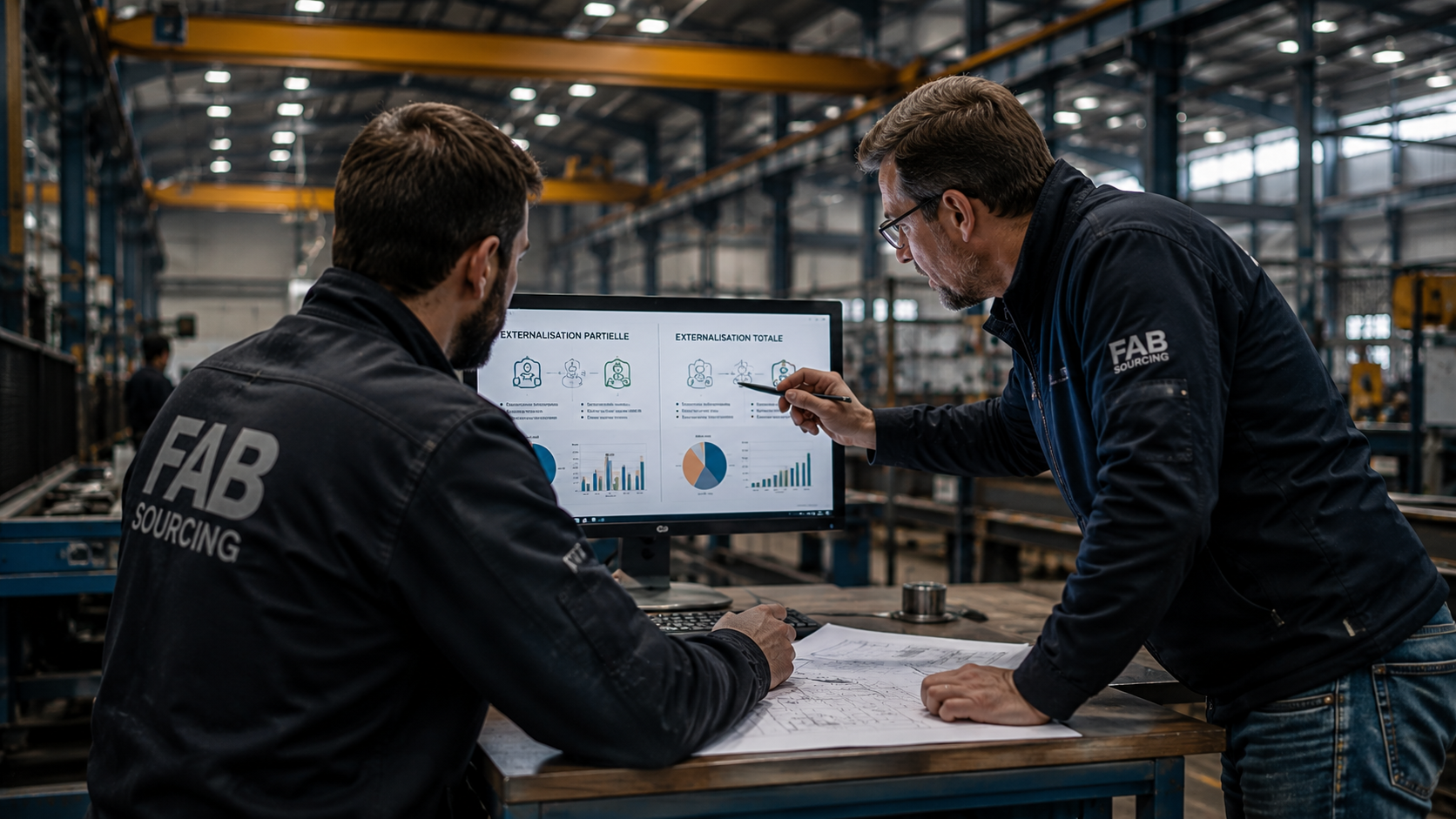
- Entrust to a long-term partner repetitive or high-volume fabrication: structures, standard stairs, railings, frames, racks, trays.
- Organise the flow: planned annual volumes, standardised drawings, defined quality control, delivery schedule.
Your welders then focus on high-value work, and your production capacity no longer depends on your recruitment.
Why look to Bulgaria
Bulgaria has kept a large industrial base in metallurgy and mechanical engineering, with technical schools and welders trained to European standards (EN ISO 9606-1 qualifications, EN 1090-certified workshops). The hourly labour cost in industry is €10.9 there, versus €47.7 in France and €49.8 in Germany in 2025, according to Insee and Eurostat (source).
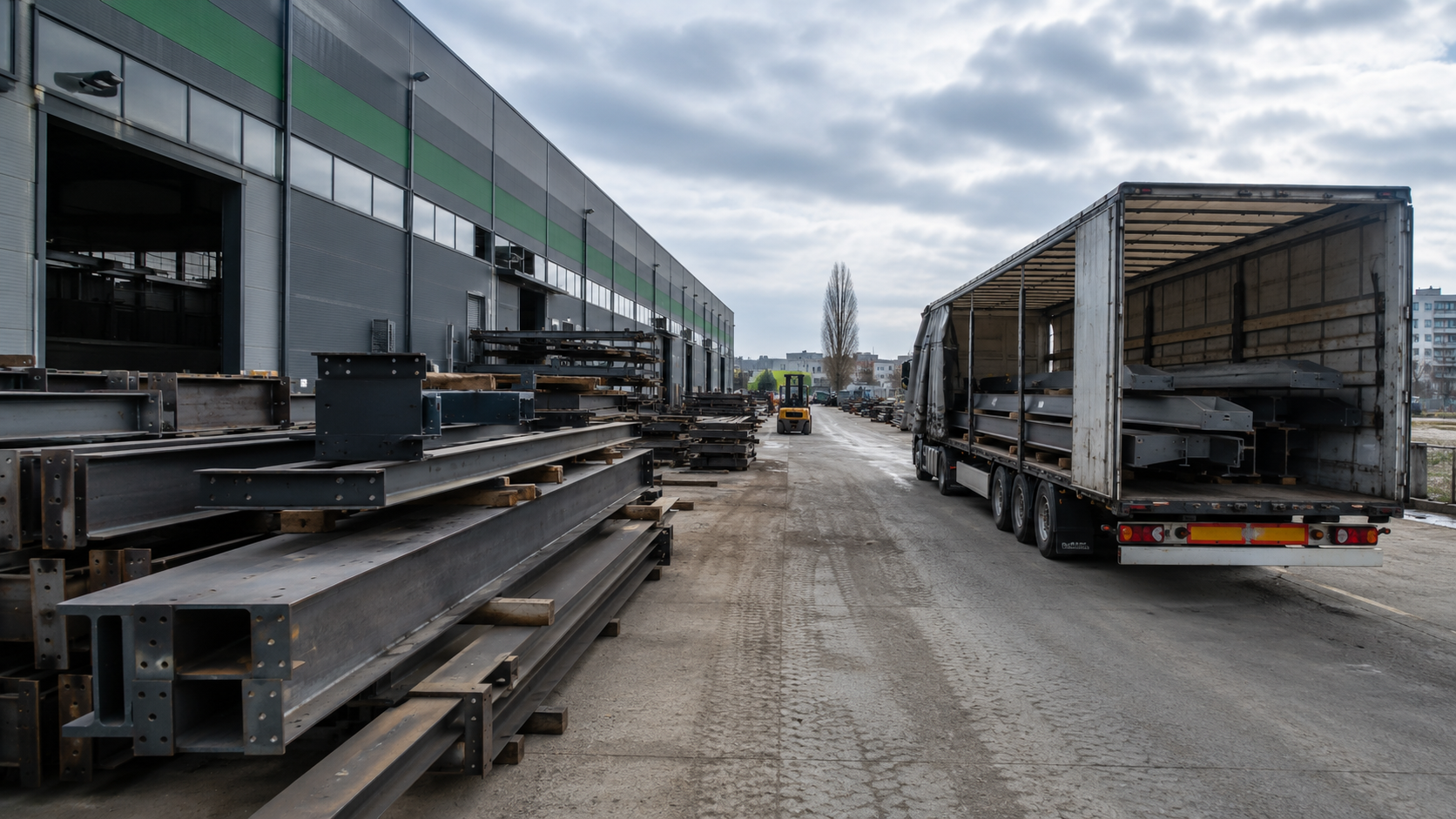
An EU member and part of the euro zone since 1 January 2026, the country offers the same standards, the same currency and no customs, 3–4 days by truck from France.
How to make the switch
- Start with one part family that is well defined, with complete drawings and a clear execution class.
- Validate a first batch with incoming inspection before committing to volumes.
- Set indicators: conformity rate, on-time delivery, quote response time.
- Keep a single contact who speaks your language and knows the trade, so you do not spend your days coordinating.
- Extend gradually to other families once the relationship is established.
Fab Sourcing: extra welding capacity for your workshop
We give you access to audited Bulgarian workshops, with qualified welders and quality control before shipment. You keep control of your customers and your sites; we manage fabrication, follow-up and transport to your workshop or site.
Send us the drawings of a part you make regularly: within 48 hours we will show you what manufacturing it in Bulgaria would look like, lead time and full cost included.