 +33 (0)7 84 05 73 75
Introduction
Reshoring industrial production is no longer a marketing slogan. In 2026, it has become a strategic necessity for many European manufacturers facing unpredictable intercontinental transport times, growing geopolitical uncertainty and ever stricter traceability requirements. In response, one destination clearly stands out as the most relevant alternative to South-East Asia: Bulgaria.
At Fab Sourcing, we support European companies in moving their production to this region. Here is why it is today the most rational choice for precision metal subcontracting.
1. The end of "all-Asia": the new constraints of distant subcontracting
For two decades, China and Vietnam were the promised land of industrial offshoring. However, several structural factors have gradually eroded this competitive advantage:
Transport times have become critical – A container from Shanghai to a North European port now takes 35 to 45 days, compared with 15 to 20 days before the pandemic. Instability around the Suez Canal, tensions in the South China Sea and congestion in European ports add uncertainties that just-in-time supply chains can no longer absorb.
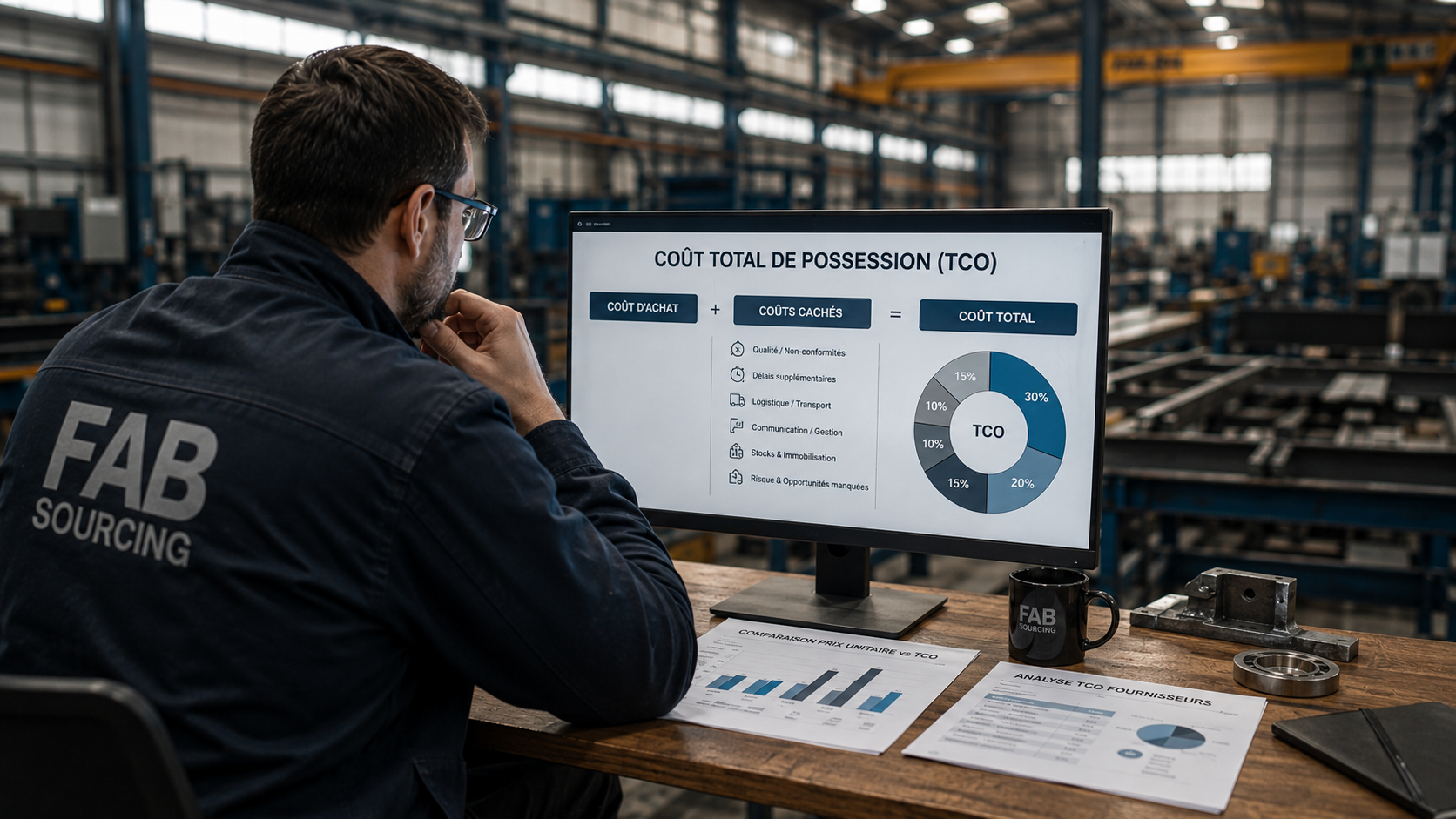
The hidden costs of distance – On top of the quoted unit price come sea freight (+15–25%), customs duties and import taxes, safety stock (needed to offset lead times), cross-cultural coordination costs and expensive audit trips. The real total cost of ownership (TCO) often comes close to – or exceeds – that of European production.
Intellectual property in a grey zone – Protecting technical data, drawings and manufacturing processes remains a major concern in some Asian jurisdictions. Bulgaria, as part of the EU legal framework, offers unmatched legal certainty.
Traceability and environmental standards – European markets now require full traceability of raw materials and manufacturing processes. The EU Carbon Border Adjustment Mechanism (CBAM), which applies to imported steel, and buyers' CSR requirements make distant production in less and less transparent environments harder to justify.
2. Bulgaria: a structural advantage, not a short-term windfall
Contrary to a simplistic view, Bulgaria's competitiveness does not rest on wage differences alone. It is built on solid industrial fundamentals:
A quality technical heritage – The country has a long industrial tradition, with renowned technical schools and a workforce trained in cutting, welding and machining. This technical base is now being modernised through investment in CNC machine tools, fibre laser cutting and robotics.
Competitive yet sustainable labour costs – With labour costs 30–50% lower than in France or Germany, Bulgaria offers a significant difference without the social and political risks of other low-cost regions. This gap is structural: it is based on a lower cost of living and competitive taxation, not on social deregulation.
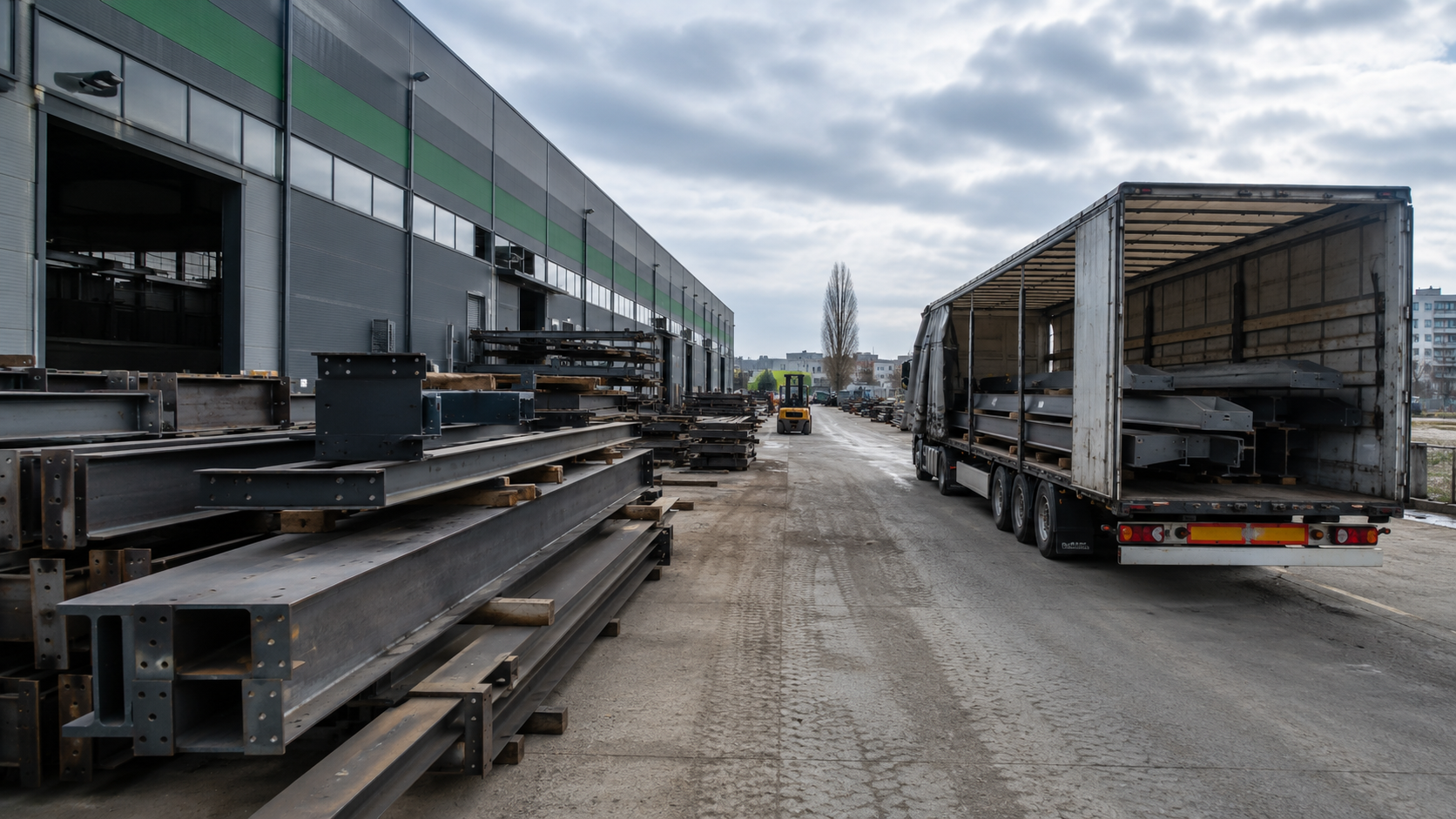
Geographical proximity: a major logistics advantage – 3–4 days by full truckload to France, 7–10 days groupage. Only one hour's time difference with Central Europe. Direct flights to Sofia and Varna from many European cities. This proximity allows frequent quality audits, fast reaction to production changes and near real-time coordination with your teams.
The European Union regulatory framework – CE marking, harmonised European directives, protection of intellectual property under EU law, mutual recognition of professional qualifications. Producing in Bulgaria means producing in Europe, with all the legal and commercial guarantees that implies.
3. Metalworking in Bulgaria: a mature ecosystem
Metalworking is one of the country's industrial pillars. Here are the technical capabilities Fab Sourcing has identified and qualified:
Modern machinery – Our partner workshops have latest-generation machine tools: fibre laser cutting (Trumpf, Amada, Bystronic), 6-axis CNC press brakes (LVD, Safan/Darley), vertical and horizontal machining centres, welding robots (FANUC, KUKA) and coordinate measuring machines (Hexagon, Zeiss).
Material expertise – Mild steel (S235, S355), stainless steel (304L, 316L), aluminium (1050, 5083, 6060), zinc and specific alloys. Our partners source certified raw materials with full mill-test traceability.
Certified welding skills – Welders qualified to EN ISO 9606, validated WPS/PQR procedures, non-destructive testing (radiography, ultrasonic, penetrant) to EN ISO 17635. EN ISO 3834 certification available for demanding projects.
Industrial and architectural finishes – Powder coating (polyester, epoxy, hybrid), hot-dip galvanising, aluminium anodising, industrial liquid painting, stainless steel passivation. Paint booths with automatic pre-treatment lines.
4. The concrete benefits for your company
By outsourcing your metal production to Bulgaria through Fab Sourcing, you get:
Measurable savings – A 20–50% reduction in production costs, calculated on total cost of ownership (material + fabrication + transport + quality + coordination). Not a promise on unit price alone, but a complete view of your value chain.
Operational flexibility – Peaks in activity absorbed without industrial investment or time-consuming recruitment. The ability to go from 100 to 1,000 parts without a ramp-up period. Small batches and prototypes handled without set-up penalties.
Reduced risk – Geographical diversification of your supply chain. Less dependence on a single supplier or region. A European contractual framework with predictable case law in the event of a dispute.
Focus on your core business – Your teams are freed from production constraints to focus on innovation, sales and customer service. Fabrication becomes a controlled variable cost, not a heavy structure to manage.
5. How Fab Sourcing secures your move
Successful outsourcing does not depend on price alone. It relies on a rigorous method:
Prior audit and qualification – Every partner workshop is audited against Fab Sourcing criteria: machine capacity, quality system, certifications, customer references, financial health and CSR commitment. Only 30% of the workshops assessed are selected.
A single point of contact – One contact, speaking English and French, manages your entire project: technical, quality, logistics and commercial. No information lost along the chain, no cultural barrier.
Systematic prototyping and validation – Before any series production, we make validation parts to confirm dimensional compliance, tolerances, finishes and assemblies. You approve before committing to volume.
Continuous production monitoring – Weekly reporting, in-process checkpoints, scheduled quality audits. Our team steps in as soon as a deviation is detected, to correct course without affecting your lead times.
Integrated logistics – Optimised road transport (3–4 days by full truckload to France, 7–10 days groupage), warehouse stock management if needed, delivery to site or in kit form as required. Real-time shipment tracking.
Conclusion
Bulgaria is not a stand-in for Asia. It represents a different production model: proximity, quality, regulatory compliance and agility, all at a competitive cost structurally lower than Western Europe.
For manufacturers looking to secure their supply chain, reduce costs without compromising quality and regain flexibility in a volatile market, Bulgaria is no longer an option. It is the most rational solution.
Send us your drawings. We will prepare a feasibility analysis and a first quote within 48 hours.