 +33 (0)7 84 05 73 75
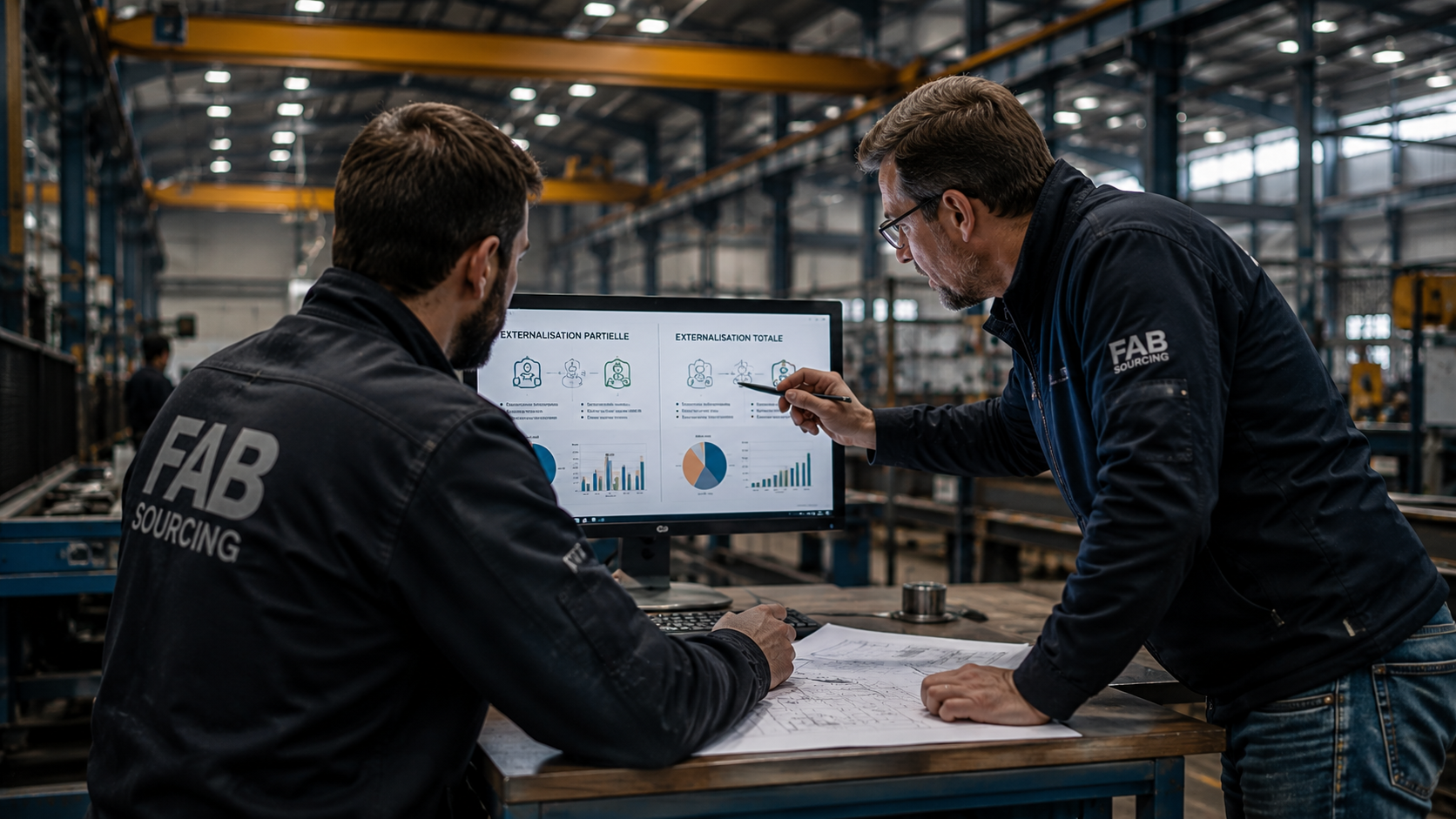
Outsourcing does not mean closing your workshop. Between making everything yourself and outsourcing everything, there is a whole range of options. The right one depends on three things: what your customers value in you, how regular your volumes are, and your ability to recruit.
Three possible models
| Model | Principle | For whom |
|---|---|---|
| Capacity subcontracting | Occasionally outsourcing what you have no time to make | Workshops overloaded by peaks in activity |
| Partial outsourcing | Permanently outsourcing one or more part families, keeping the rest | Most metal fabricators and manufacturers |
| Full outsourcing | Outsourcing all fabrication, keeping design, sales and installation | Engineering firms, system integrators, installers, distributors |
Partial outsourcing: the best of both worlds
You keep a workshop, but you refocus it. Repetitive or labour-intensive fabrication goes to a partner; urgent, technical or rework parts stay with you.
Benefits
- You keep your know-how and your responsiveness on urgent jobs.
- You free up capacity without recruiting.
- You constantly compare internal and external costs, which keeps everyone honest.
Points to watch
- Define the boundary clearly: which families go, which stay, and why.
- Manage two production flows in parallel, with two schedules.
- Avoid outsourcing only the "difficult" or poorly defined parts: it is the surest way to fail the start-up.
Parts often outsourced: standard structures and frames, straight and spiral staircases, railings, racks and spill trays, machine frames and skids.
Full outsourcing: focus on design, sales and installation
You no longer have a fabrication workshop, or you do not want to build one. Your value lies in design, customer relationships, site coordination and installation.
Benefits
- No investment in machines, buildings or material stock.
- Variable costs that follow your turnover.
- Access to capacity (laser cutting, galvanising, large series) you would not have on your own.
Points to watch
- Dependence on one supplier: plan a back-up or several workshops.
- Technical control: keep someone in-house who can read a workshop drawing, check a weld and accept a delivery.
- Responsibility: for a structure, the EN 1090 CE marking must be carried by the workshop that manufactures it. Check it.
A 6-question decision grid
- What do your customers really buy from you? If it is design and installation, fabrication can go. If it is a rare welding skill, keep it.
- Are your volumes regular? Recurring, predictable volumes suit long-term outsourcing; one-off urgent parts less so.
- Are your drawings complete and standardised? Without clear shop drawings, start there: it is the condition for any successful outsourcing.
- Can you recruit and keep welders? If the answer has been no for two years, the question is no longer whether to outsource, but how.
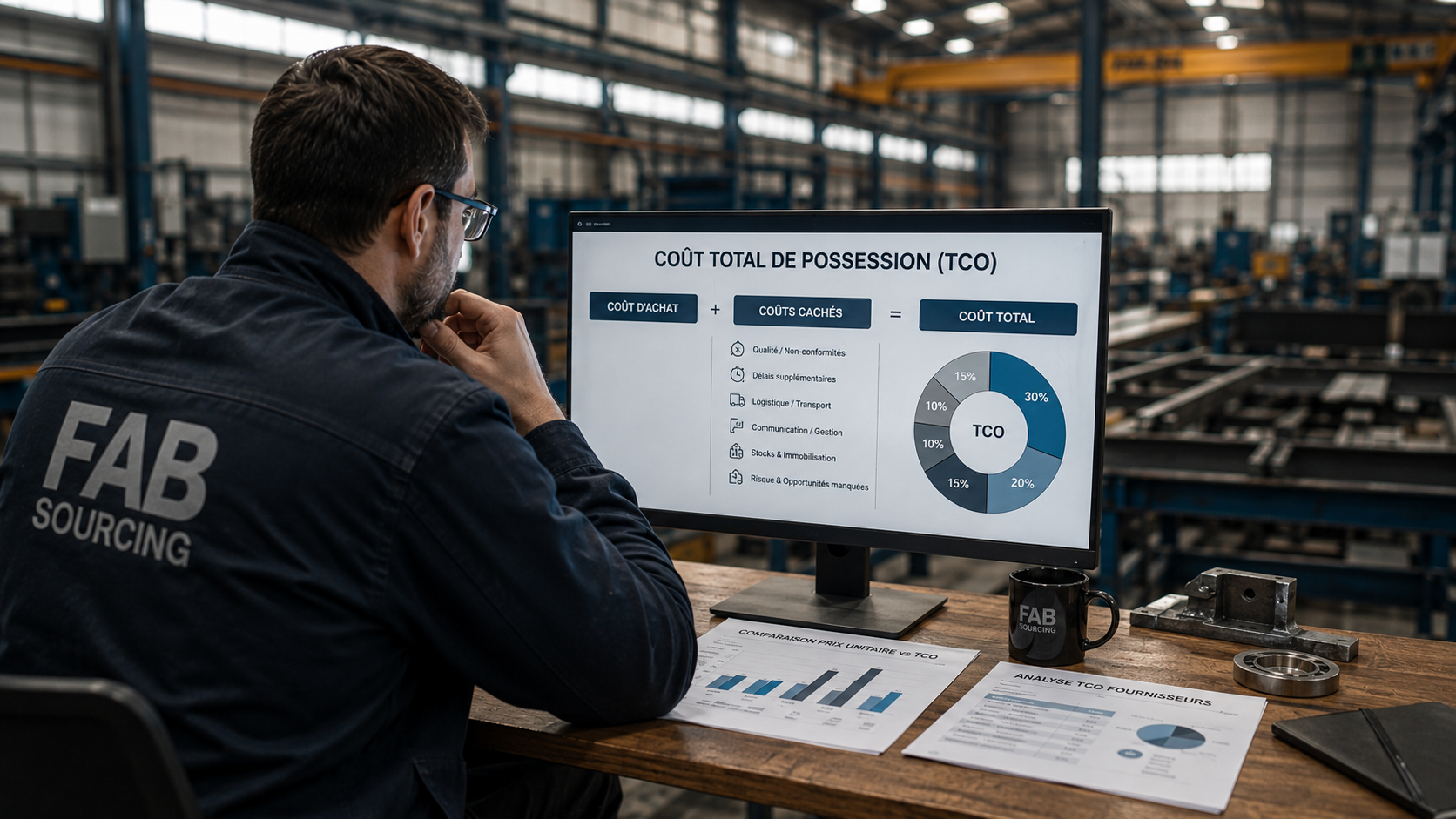
- What is your full internal cost? Compare it with the full external cost (see our TCO method), not with the unit price alone.
- What lead time do your customers accept? Manufacturing in Bulgaria adds 3–4 days of transport by full truckload to France (7–10 days groupage): compatible with most planned projects, not with next-day breakdown repairs.
How to start without risk
- A pilot on one part family, with complete drawings and a limited batch.
- Written success criteria: conformity, lead time, full cost.
- A review after 3 to 6 months, before extending or adjusting.
How Fab Sourcing supports you
Whether you want to outsource a single part family or all your fabrication, we build the set-up with you: choice of parts, workshop selection, pilot batch, quality control and logistics to your site. You keep a single point of contact who comes from the industry.
Tell us about your current production: within 48 hours we will suggest the part families most worth outsourcing and give you a first price.